

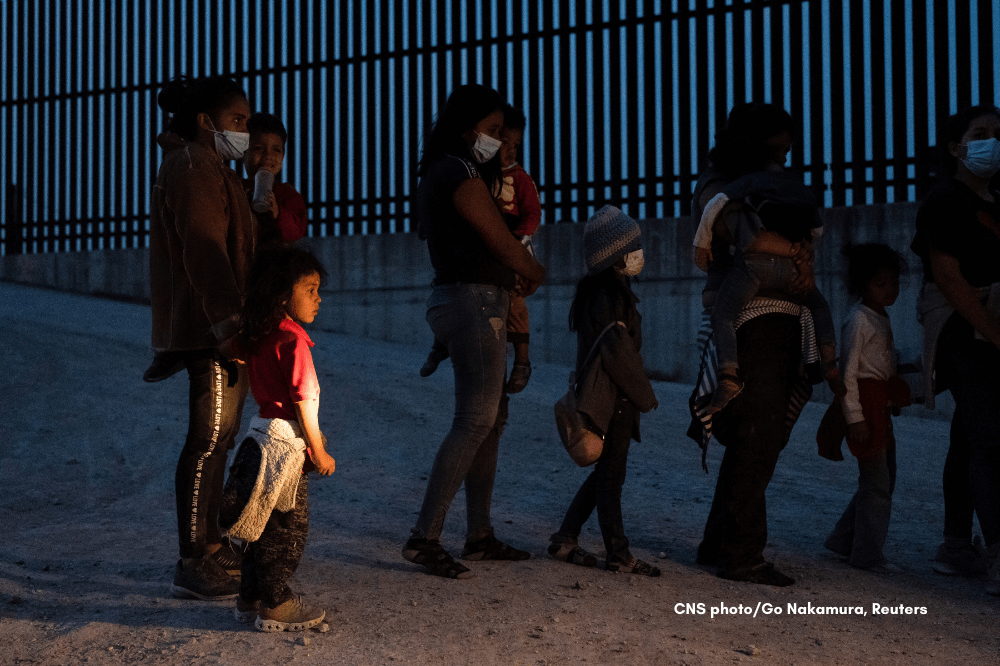
Catholic perspective on immigration
Therefore, it is urgent to remember that “every migrant is a human person who, as such, possesses fundamental, inalienable rights that must be respected by everyone and in every circumstance.”
-Pope Benedict XVI, Encyclical Letter Caritas in Veritate
Our thoughts and actions toward our immigrant brothers and sisters should be guided by fundamental Catholic teaching on upholding human dignity and caring for the poor and vulnerable. The topic of immigration is complex and divisive. This page serves as a resource to help Catholics form their conscience on this topic and to guide Catholics in living out the teachings of the Church concerning immigration.
"In recognizing the human dignity of the migrant, the Church is not offering support for illegal immigration. Rather, the Church calls on Catholics, and all people of goodwill, to respond to the needs of the individual person regardless of how he or she arrived" (Seeing Christ in the Immigrant, Spring 2025).
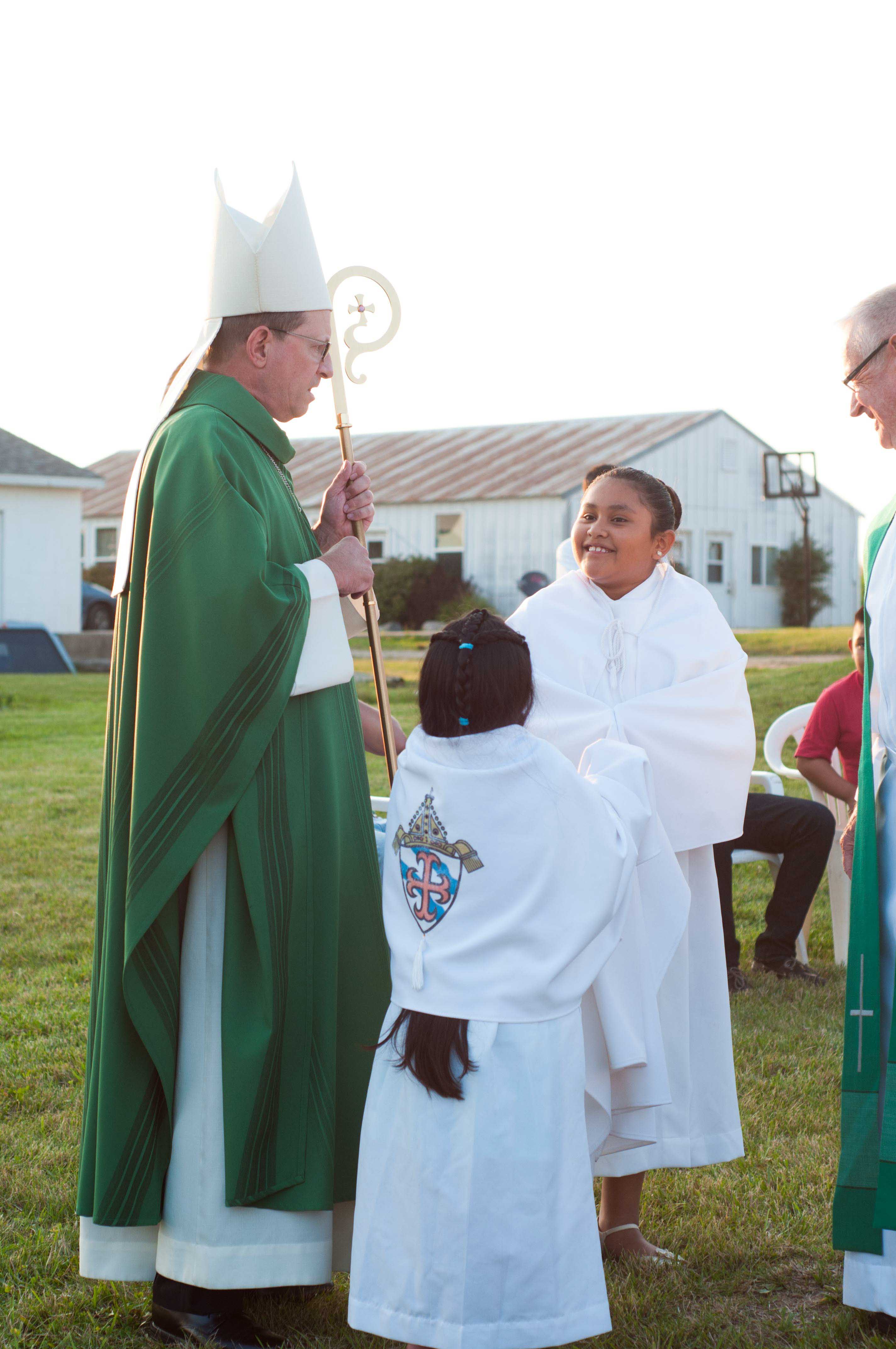
What Does the Church Teach About Immigration?
The Catechism of the Catholic Church succinctly summarizes the Catholic perspective on immigration in paragraph 2241: “The more prosperous nations are obliged, to the extent they are able, to welcome the foreigner in search of the security and the means of livelihood which he cannot find in his country of origin. Public authorities should see to it that the natural right is respected that places a guest under the protection of those who receive him.Political authorities, for the sake of the common good for which they are responsible, may make the exercise of the right to immigrate subject to various juridical conditions, especially with regard to the immigrants’ duties toward their country of adoption. Immigrants are obliged to respect with gratitude the material and spiritual heritage of the country that receives them, to obey its laws and to assist in carrying civic burdens.”
Key Principles on Immigration Based on the Teachings of the Church
•Persons have the right to find opportunities in their homeland. When the conditions necessary for a dignified life are absent, individuals have the natural right to migrate to support themselves and their family.
•More prosperous nations are obliged, to the extent they are able, to welcome those in search of the security and means of livelihood unavailable in their country of origin.
•Countries have the right to maintain their borders and regulate immigration, consistent with the common good and with respect for the sanctity of human life.
•Refugees and asylum seekers should be afforded protection.
•The God-given dignity and rights of undocumented immigrants should be respected.
•Immigrants have a responsibility to respect the country that receives them.
Common questions about Catholic teaching and immigration
What does the Church say about illegal immigration and undocumented migrants?
The Catholic Church affirms the rule of law and encourages the use of lawful immigration pathways. The Church does not encourage unnecessary or irregular migration: “Ideally, unnecessary migration ought to be avoided.”2 The Catechism states that “immigrants are obliged to respect with gratitude the material and spiritual heritage of the country that receives them, to obey its laws and to assist in carrying civic burdens.”3
Forced migrants, such as refugees and asylum seekers, may be precluded from pursuing a visa or some other advance permission to enter the country because they face life-threatening situations or other serious dangers. The element of danger or being forcibly displaced gives rise to a human right to seek protection through irregular means as opposed to migrating through ordinary channels. Within the reality of irregular entry to the United States, authorities must protect the dignity and safety of vulnerable persons from forms of evil such as human, labor or sexual trafficking.
Why do Catholic organizations serve people who enter the U.S. without authorization?
Faithful to Jesus’ mandate to “welcome the stranger,” Catholic-affiliated organizations provide basic human needs to migrants in acknowledgment of their inherent God-given dignity and as a visible sign of God’s love and mercy to those in need. Pope St. John Paul II said that “As a sacrament of unity and thus a sign and a binding force for the whole human race, the Church is the place where illegal immigrants are also recognized and accepted as brothers and sisters. It is the task of the various Dioceses actively to ensure that these people, who are obliged to live outside the safety net of civil society, may find a sense of brotherhood in the Christian community.”4
What services do Catholic organizations provide to migrants and refugees?
The Church provides humanitarian aid to migrants and refugees, often at the request of local, state, and federal governments. Among the services Catholic organizations provide include resettlement and integration services to newly arrived legal refugees, affordable immigration legal services, and basic humanitarian needs like meals, clean clothes, medical attention, and temporary shelter. The Church and its clergy also endeavor to provide access to the Sacraments for migrants, including in their native languages.
Does USCCCB profit from its programs for migrants and refugees?
No. The U.S. bishops’ Migration and Refugee Services receives federal funding to assist with the lawful resettlement of refugees who have been vetted by the federal government, but the costs of the program exceed the funds received for the program. An independent report confirmed that USCCB’s financial numbers indicate that it spends more on refugee resettlement than it receives from the federal government. For example, in 2023, the U.S. bishops’ office spent $134 million in services while receiving $130 million from the federal government. The USCCB also notes that most of the funding received from the federal government is passed onto local organizations, such as the regional Catholic Charities agencies, which directly serve these newcomers.
Additional Resources
We need comprehensive immigration reform
Archdiocese of Saint Paul & Minneapolis Archbishop Hebda's op-ed on the topic
Seeing Christ in the Immigrant
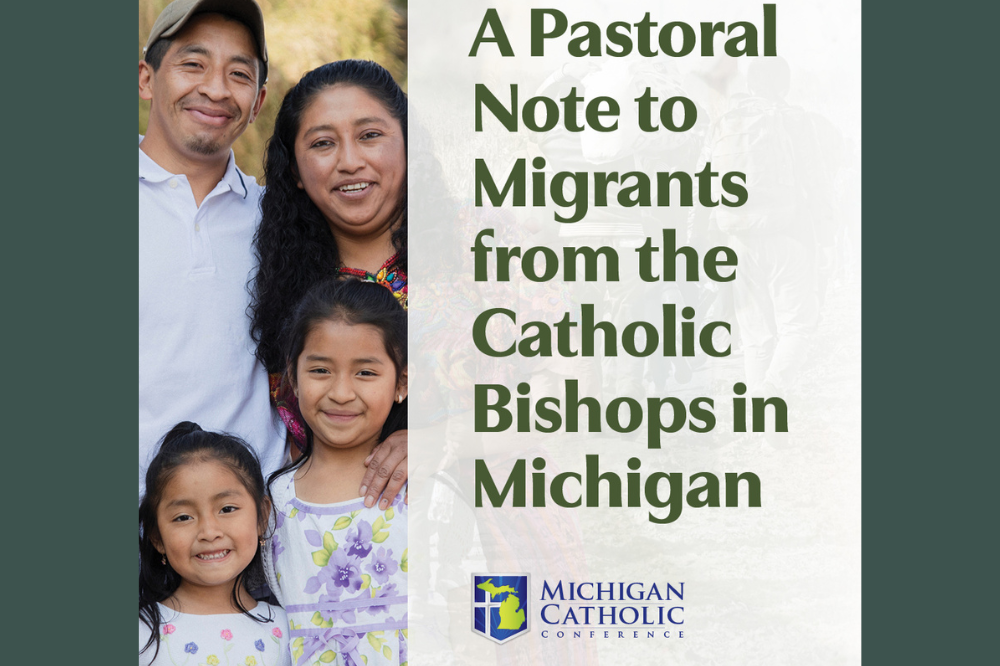
Read the publication from the Michigan Catholic Conference
Ver a Cristo inmigrante
Read Seeing Christ in the Immigrant in Spanish.